Weather Radar for Boating: Track Live Marine Hazards & Navigate Safely
On the open water, a live weather radar for boating is your ultimate defense against sudden sea storms. Backed by real-time Doppler telemetry and high-resolution ECMWF model data, this guide reveals how to track dangerous squalls, shifting gust fronts, and lightning in real time. Read on to master live marine weather tracking and navigate safely!
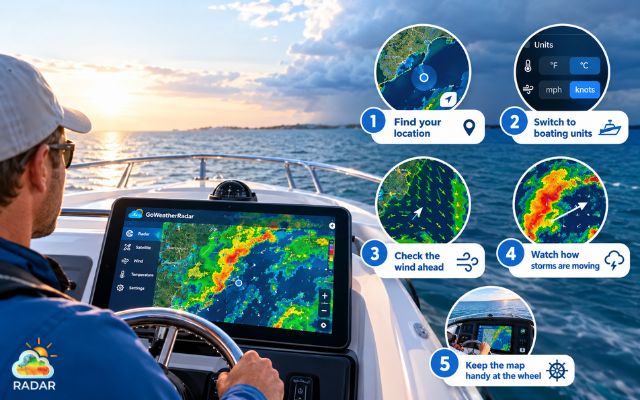
A live weather radar for boating is essential for boating safety
Critical Marine Hazards Tracked by Radar
When you are out on the open water, weather can turn on you faster than expected.
A live radar acts like an extra pair of eyes, helping you spot fast-moving squalls and sudden wind gusts long before they hit your boat.
The weather radar application does not stop here.
It also warns you about severe offshore storms that carry dangerous lightning or waterspouts - things you definitely do not want to encounter near your mast.
Not only rain, but the map also shows you sudden changes in wind direction that usually create rough, choppy waves, as well as thick rain bands.
Keeping an eye on these live updates gives you plenty of time to tweak your course and keep everyone on board safe.
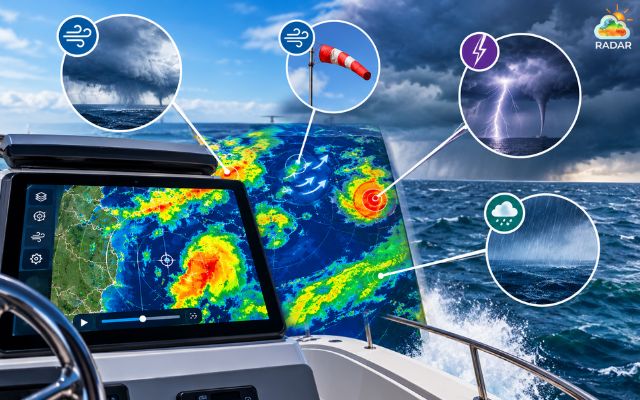
A weather radar is necessary for a safe boating trip
Key Weather Radar for Boating Features Every Boater Needs
To make quick and confident choices at the helm, you need a radar map that is simple to use and updates constantly.
Here are essential features to look for in a weather radar for boating:
-
Fast Live Updates: Marine weather shifts rapidly. High-frequency radar updates ensure you are tracking real-time rainfall and storm movements as they develop.
-
Easy Unit Switching to Knots & Beaufort: You can quickly change wind speed readouts to Knots or the Beaufort scale in the settings menu, matching your standard nautical charts.
-
Clear Wind & Gust Overlays: View real-time wind directions and gust speeds laid directly over the rain map. This makes it easy to estimate wave roughness, drift, and boat resistance.
-
Integrated ECMWF Forecast Model: By combining real-time ground radar data with the trusted ECMWF global model, you can track live rain now and see projected forecasts for the hours ahead.
-
Toggle Multiple Weather Layers: Effortlessly switch between Rain, Wind Gusts, Cloud Cover, and Air Pressure layers on a single, clean map view.
-
Lightweight Mobile Browser Access: Open the map directly in your phone or tablet browser without downloading heavy apps. This saves precious device storage, mobile data, and battery power while underway.
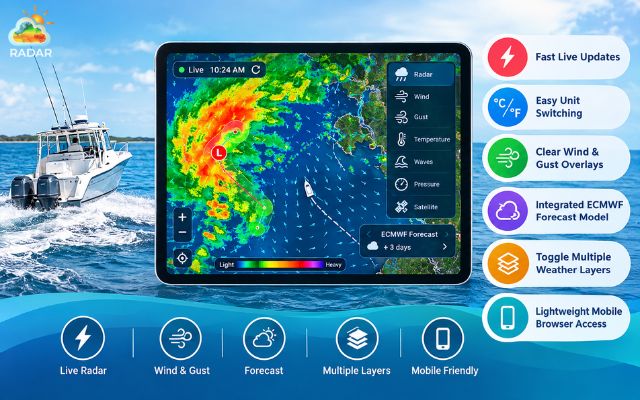
Essential features in a weather radar for boating
GoWeatherRadar: A Reliable Free Radar Tool for Boaters
GoWeatherRadar gives boaters a simple, free way to check live weather right in their web browser - no sign-ups, fees, or cluttered menus required:
-
No App Needed & Battery-Friendly: Open the map on your phone or tablet browser in seconds. Because there is no heavy app to install, it saves your device's battery and storage space while you are out on the water.
-
All Weather Layers in One View: See the complete weather picture without switching pages. Easily tap to switch between live rain, wind speed, gusts, air pressure, and cloud cover on one clean map.
-
Backed by Trusted ECMWF Forecasts: It pairs live ground radar updates with the high-precision 9 km ECMWF model, giving you accurate short-term and multi-day outlooks for any trip.
-
Easy Storm Replay: Use the timeline slider to re-watch how rain clouds moved over the last 1–2 hours. Seeing where the storm has been makes it much easier to guess where it will head next.
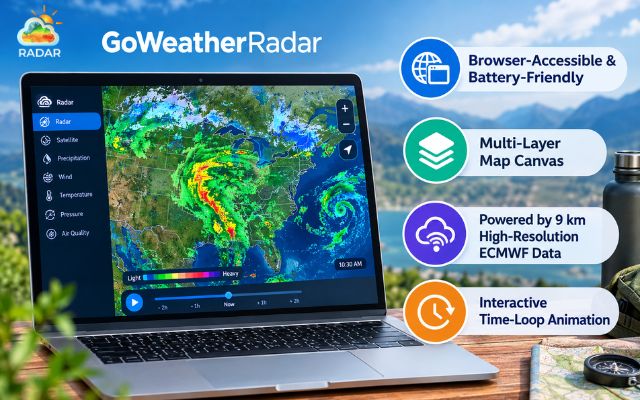
GoWeatherRadar provides incredible features in weather radar for boating
How to Use GoWeatherRadar for Boating Safety
Using GoWeatherRadar is super easy, whether you are getting ready at the dock or already out on the water. Here is how to get started in a few quick steps:
-
Find Your Location: Type your marina or harbor into the top search bar. If you are already on the boat, just tap the GPS target icon to pin your exact position on the map.
-
Switch to Boating Units: Head into the settings menu and change wind speed to Knots or Beaufort (Bft). You can also set pressure to hPa and distance to Nautical Miles so everything matches your marine charts.
-
Check the Wind Ahead: Turn on the Wind layer before pushing off. Look at the wind colors along your route to get a good idea of expected wave action, resistance, and how smooth your ride will be.
-
Watch How Storms Are Moving: Switch over to the Rain layer to see active rain cells. Watching how the storm clouds moved over the last hour or two helps you guess where they are headed next.
-
Keep the Map Handy at the Wheel: Bookmark the map on your phone or tablet and keep it open at the helm. That way, you can take a quick look whenever you need a live weather update while steering.
Use GoWeatherRadar for boating to stay safe
Discover more like this
- Weather radar for fishing
- Weather radar for camping
Sum up
Having a reliable weather radar for boating is essential for staying safe and making smart calls on the water. By tracking live rain cells, shifting wind gusts, and pressure trends on GoWeatherRadar, you can easily outmaneuver sudden marine hazards. Bookmark the map today, check your forecast before setting sail, and enjoy smooth, worry-free navigation!


0 Comments
Leave a Comment
Your email address will not be published. Required fields are marked *