Weather Radar for Fishing: Ultimate Live Map & Forecast Tool
Check out this live weather radar for fishing map before your next casting trip. Studies show that over 70% of sudden marine hazards and low-catch days stem from unexpected micro-weather shifts. Discover how tracking real-time rain, wind, and barometric pressure trends helps you stay safe, land more fish, and dominate every water body today!
Weather radar for fishing
Why Weather Radar Matters for Anglers
Experienced anglers know that fish do not react to calendar dates, they react to atmospheric changes.
A generic daily weather forecast only offers broad averages, but fish respond immediately to real-time shifts in pressure, wind, and rain.
Using a live weather radar is essential for two big reasons: safety and catch rates.
On the safety front, live Doppler radar refreshes every few minutes to give you early warnings about fast-moving thunderstorms, squalls, and lightning.
This extra time allows you to navigate out of harm's way long before a sudden hazard hits your boat.
Read more:
- Weather radar for boating
- Weather radar for camping
When it comes to fishing success, tracking live weather patterns helps you predict peak feeding windows.
For instance, a dropping barometric pressure front right before a storm often triggers aggressive feeding behavior.
Additionally, tracking wind and rain overlays helps you pinpoint active feeding zones, like windward shorelines where plankton and baitfish gather.
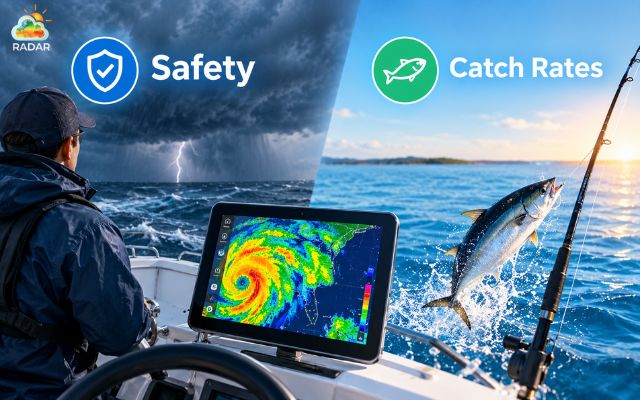
A weather radar for fishing can ensure safety and catch rates
A weather radar can do more than that? Check weather radar application here!
Key Features to Look for in a Weather Radar for Fishing
Not all radar tools suit the needs of fishermen. A basic weather app might show you if it is raining in the city, but anglers need localized, detailed data.
When choosing a weather radar for your fishing trips, look for these essential features:
1. High-Resolution Live Doppler Radar
Look for a radar that refreshes every 2 to 5 minutes.
High-resolution precipitation overlays allow you to distinguish between light drizzling rain and heavy, dangerous thunderstorm cells.
Clear color scales, ranging from light green for mild rain to dark red and purple for intense storms help you evaluate cloud density at a glance.
2. Multi-Layer Environmental Overlays
A good fishing radar needs to display more than just rain. You want a tool that lets you toggle multiple layers on a single map interface:
-
Wind Speed & Direction: Identifies windward shorelines where game fish gather to hunt baitfish.
-
Barometric Pressure Systems: Helps you track high and low-pressure fronts to time peak feeding windows.
-
Cloud & Humidity Density: Shows surface coverage and overcast conditions, which dictate how deep or shallow fish will hold.
3. Integrated Global Forecast Models
Live radar shows what is happening right now, but you also need to know what will happen in the next few hours.
Platforms that integrate proven predictive models, like the ECMWF (European Centre for Medium-Range Weather Forecasts) give you reliable, long-term accuracy alongside real-time radar scans.
4. Mobile Speed and Customization
Sifting through heavy menus while holding a fishing rod is frustrating. Look for a clean, browser-accessible map that loads fast even on weak cellular data out on the water.
Customizable settings, such as switching wind units between knots, mph, or km/h make it easy to read data on the fly.

Must-have features in a reliable weather radar for fishing
How GoWeatherRadar Empowers Anglers
Finding a weather tool that balances detailed meteorological data with ease of use can be tricky.
Many marine applications hide their best features behind paywalls or clutter the screen with heavy menus.
GoWeatherRadar solves this by offering an intuitive, high-resolution platform designed to help anglers make quick, informed decisions on the water.
Here is how GoWeatherRadar simplifies planning for fishermen:
100% Free & No Hidden Paywalls
Unlike premium fishing apps that restrict live radar scans or pressure charts to paid subscriptions, GoWeatherRadar provides unrestricted access to its full suite of features.
You can monitor high-definition precipitation loops, wind fields, and atmospheric pressure systems without running into paywalls or forced account registrations.
Fast-Loading & Mobile-Optimized Interface
Cellular signals are often weak when you are out on a lake, cruising down a river, or sitting offshore.
GoWeatherRadar is built with a lightweight interface that loads quickly on mobile web browsers.
Smooth panning allow you to focus on specific coves, bayous, or shorelines without lag or unnecessary battery drain.
Interactive Timeline Slider
Timing is everything in fishing. GoWeatherRadar features an interactive timeline slider at the bottom of the map interface.
This tool allows you to hit play to watch recent storm trajectory loops or drag the slider forward to preview forecast projections powered by the reliable ECMWF weather model.
Seeing exactly when a rain cell will arrive - or pass helps you plan your casts down to the minute.
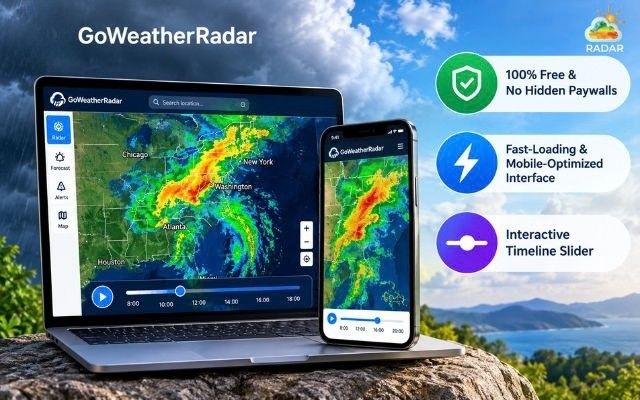
GoWeatherRadar is the ideal weather radar choice for any angler
How to Use GoWeatherRadar to Plan a Successful Fishing Trip
To get the most out of your outing, use GoWeatherRadar to build a quick weather check routine before and during your trip.
Step 1: Set Your Exact Fishing Location
Open the interactive map at GoWeatherRadar Radar Maps. Use the search bar to enter the name of your target body of water, nearby town, or exact coordinates.
You can also tap the location button to center the map on your current position instantly. Zoom in to identify specific coves, points, or docks you plan to fish.
Step 2: Check the Barometric Pressure & Wind Layers
Before looking at rain, switch to the Pressure layer to check the current barometric trend. Falling pressure usually signals an active pre-storm feeding frenzy, while steady high pressure often calls for deeper, slower presentations.
Next, toggle the Wind layer to check wind speed and direction.
Use this data to identify windward shorelines where food will be concentrated, or plan a sheltered route if winds are too high for safe navigation.
Step 3: Toggle the Rain Radar & Play Timeline Animation
Switch to the Rain/Precipitation layer to assess current cloud reflectivity in your area.
Green patches indicate light, manageable showers that can stir up feeding activity, while dark red or purple blocks warn of heavy downpours and lightning.
Pay attention to the speed and direction of approaching rain cells so you know how long your current fishing window will last.
Step 4: Monitor Conditions Live While on the Water
Keep the map bookmarked on your mobile browser while fishing. Weather patterns shift fast, especially during seasonal transitions.
Periodically refreshing the page gives you live telemetry updates refreshed every few minutes.
This allows you to stay ahead of sudden wind gusts, dodge local squalls, and spend more time safely catching fish.
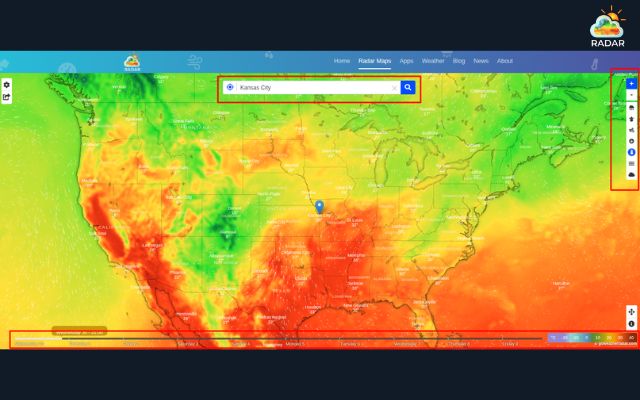
Use GoWeatherRadar for a successful fishing trip
Final Words
Integrating a live weather radar for fishing into your routine bridges the gap between a slow day and a successful catch. By monitoring real-time rain tracking, wind patterns, and barometric shifts, you can fish smarter and safer. Visit the GoWeatherRadar Interactive Radar Map today to plan your next outing with total confidence!


0 Comments
Leave a Comment
Your email address will not be published. Required fields are marked *