Typhoon Dujuan Causes Major Disruption, Power Outages, and Flooding Near Tokyo
Typhoon Dujuan struck eastern Japan with heavy rainfall and violent winds, leaving at least 10 people dead. The storm triggered severe landslides and widespread flooding across Chiba and Kanagawa prefectures. Millions faced evacuation warnings, power outages, and major travel disruptions. Rescue teams continue searching for missing residents.
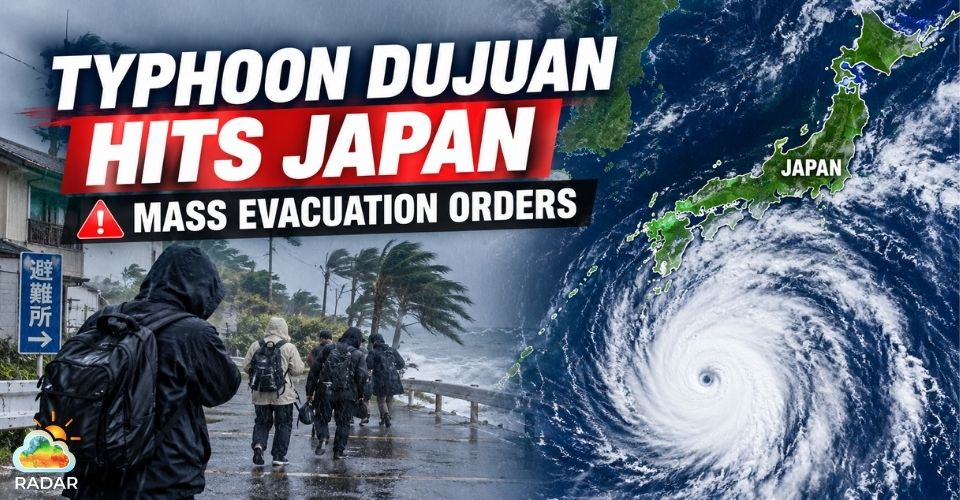
Typhoon Dujuan swept eastern Japan
Typhoon Dujuan Leaves Trail of Destruction Across Eastern Japan
Typhoon Dujuan has swept through eastern Japan, causing significant damage and severe disruptions.
Official reports confirm at least four casualties and 22 injuries across the region.
In addition, tens of thousands of homes near Tokyo lost power as the storm moved through.
By Tuesday morning, Typhoon Dujuan began moving away from the Japanese mainland.
Maximum wind speeds reached 144 kilometers per hour during the peak of the storm.
As weather conditions improved, authorities lowered most of the severe rain and landslide alerts.
However, the tropical cyclone left major chaos in its path. Heavy rain and high winds impacted several major public gatherings.
Organizers had to reschedule some Asian Games events.
Meanwhile, one of the world's largest video game trade fairs in Tokyo was forced to close early.
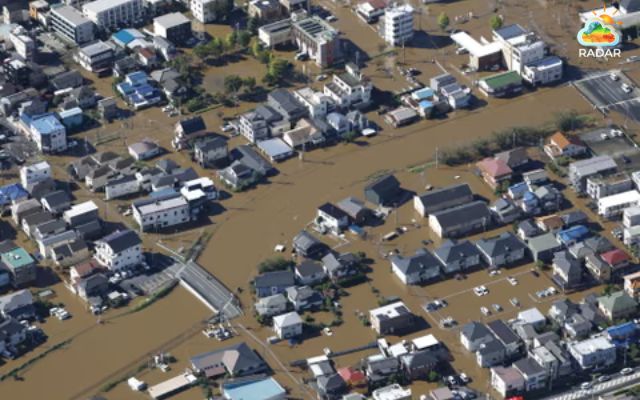
Heavy flooding across residential area in Sakura, Japan (Photo: KYODO)
Landslides Hit Kanagawa and Chiba Prefectures
Severe rainfall triggered dangerous mudslides in prefectures neighboring Tokyo.
In Yokosuka, a city within Kanagawa prefecture, torrential rain caused several mudslides.
Public broadcaster NHK reported that mud engulfed a residential home, resulting in the casualty of a woman in her 60s.
Emergency crews, including police and firefighters, worked around the clock to locate a missing elderly couple in their 70s.
Nearby Chiba prefecture suffered similar damage. Local officials reported three casualties caused by a series of landslides.
Search operations continued for two other residents who went missing after their homes collapsed.
Along with physical damage, utility services suffered heavy disruption.
Officials confirmed that around 45,000 households in Chiba remained without electricity on Tuesday morning.
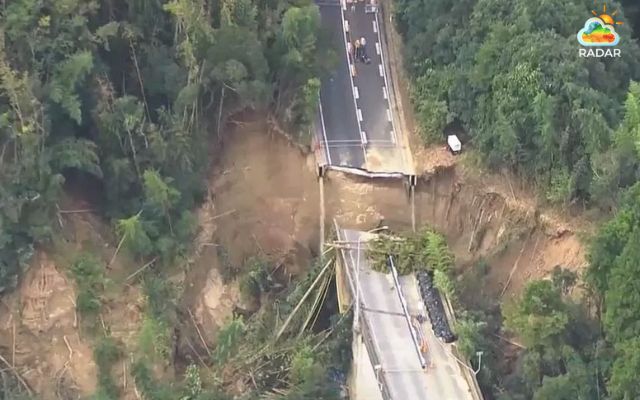
Parts of Chiba Sotobo Toll Road collapsed due to mudslides (Source: Courtesy of Chiba Prefecture)
Check live weather radar and precipitation updates on GoWeatherRadar to monitor real-time rain accumulation and movement.
Travel Disruptions and Record Rainfall
Transportation across the Greater Tokyo Area faced widespread delays and cancellations.
Japan Airlines canceled 135 domestic and international flights, while All Nippon Airways grounded 140 flights.
On Monday, Japan's Fire and Disaster Management Agency advised over 1.6 million residents in and around Tokyo to evacuate.
These evacuation advisories remained voluntary for safety reasons.
Although Typhoon Dujuan weakened as it tracked northeast, it delivered historic rainfall to several regions.
On Oshima Island, located roughly 120 kilometers south of central Tokyo, rain gauges recorded 832 millimeters of precipitation within 48 hours.
This amount is more than double the island's average rainfall for the entire month of September.
In Tokyo's Edogawa ward, precipitation reached a 24-hour record of 282.5 millimeters.
Planning travel across Tokyo or the Izu Islands? View real-time radar in Tokyo for localized wind speeds, rain clouds, and active storm alerts.
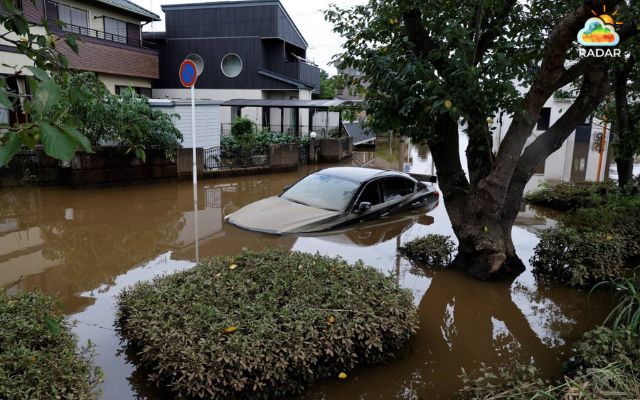
A car submerged in floodwaters due to Typhoon Dujuan (Photo: Kim Kyung-Hoon)
Japan regularly experiences strong typhoons during late summer and early autumn. However, meteorologists and climate scientists warn that global warming is making these weather systems far more severe.
A warmer atmosphere holds more moisture, leading to unprecedented rainfall levels during tropical storms.
Typhoon Dujuan represents just one of many extreme weather events this year.
Regions across East Asia, North America, and Europe continue to face unusually heavy rainfall, flash floods, and powerful tropical cyclones.
References
-
The Guardian
-
Japan Forward
-
Japan Times





0 Comments
Leave a Comment
Your email address will not be published. Required fields are marked *